


Claire Favre is a clinical psychologist in the Varennes-le-Grand Penitentiary Centre in Burgundy, France, and an associate researcher of the Psy-DREPI lab at Bourgogne Europe University. She also trains professionals in addressing domestic violence for Solidarité Femmes 21, a victim support charity.
In a recent paper, she examines the growing intrusion of the carceral system into therapeutic relationships within prisons, and its ethical implications for her practice.
This interview for The Fifth Wave explores a central question, whose relevance goes far beyond the penal context: what does it mean to care in an environment defined by its violence?
Interview conducted, written and translated from French by Mélina Magdelénat.
What led you to become a prison psychologist?
A class on totalitarianism in middle school. Specifically, we read Death Is My Trade by Robert Merle. The novel tells the story of a Nazi officer tasked with finding the most efficient way to exterminate Jewish people — the ‘final solution’. He sees himself as trapped by an impossible choice, a classic illustration of Milgram’s obedience to authority experiment.
I discovered that people could commit atrocities without being inherently monstrous. Later, I explored this further through Eichmann’s trial and Hannah Arendt’s work on the banality of evil. I wanted to understand why people do atrocious things; prison felt like a natural extension of that inquiry.
Early in my psychology studies, I got involved with the Génépi [the National Student Group for Prison Education, dissolved in 2021], a student association that provided classes in prisons, which Robert Badinter1 helped set up. Its name comes from a plant that grows where no one else goes.
Its central mission was to give detainees access to education – it’s worth pointing out that the average educational level in prison is equivalent to primary school. I taught French and Spanish there. But it also allowed detainees to discover that young people could voluntarily want to spend time with them, want to engage. Prison is a strange space; if we don’t talk about it, it doesn’t exist. People don’t necessarily think about what happens behind those walls.
The organisation’s secondary mission was to raise public awareness of prison conditions – that was the more ‘activist’ side. Through the Génépi, I visited several types of prisons and later did internships in a remand centre (for pre-trial detainees and short sentences) and a penitentiary centre (which includes a remand centre and a detention centre for longer sentences and convicted individuals).
Did the reality of prison match your expectations?
We were repeatedly warned about security: in the Génépi, we were regularly told to be very careful with detainees, that it would be dangerous, especially as young students. There was a lot of pressure on how we should interact with them.
But in my experience, the environment is so secure — in consultation rooms, there’s an emergency pedal on the floor or a panic button, guards patrol behind glass doors — that we’re actually freed from the responsibility of securing ourselves. We can truly be available for the person.
I’ve actually felt much less unsafe working in prison than, for example, in a community mental health centre on a Friday evening, more or less alone in the building, attending to someone who’s drunk or difficult. Similarly, some colleagues who work in the ER are a lot more at risk than in prison.
You later moved into research alongside your clinical work. Why?
As a young graduate, I struggled to find meaning in certain violent acts. The literature explains that there isn’t one type of violent act, but many — but I needed to push the reflection further, to understand, by turning to research.
During my studies, I read the book on violent acts by Claude Balier, one of the first psychoanalysts to introduce psychological care, including psychoanalytic approaches, into prisons in the 1980s.
I contacted him because I wanted him to supervise me. He was retired, but we formed a bond, and he became my informal supervisor for a long time. He encouraged me to do my thesis on emotions and violent behaviour. It was a very meaningful encounter.
I then started teaching alongside my clinical practice, so I wear both hats. It’s good to step out of the prison environment from time to time.
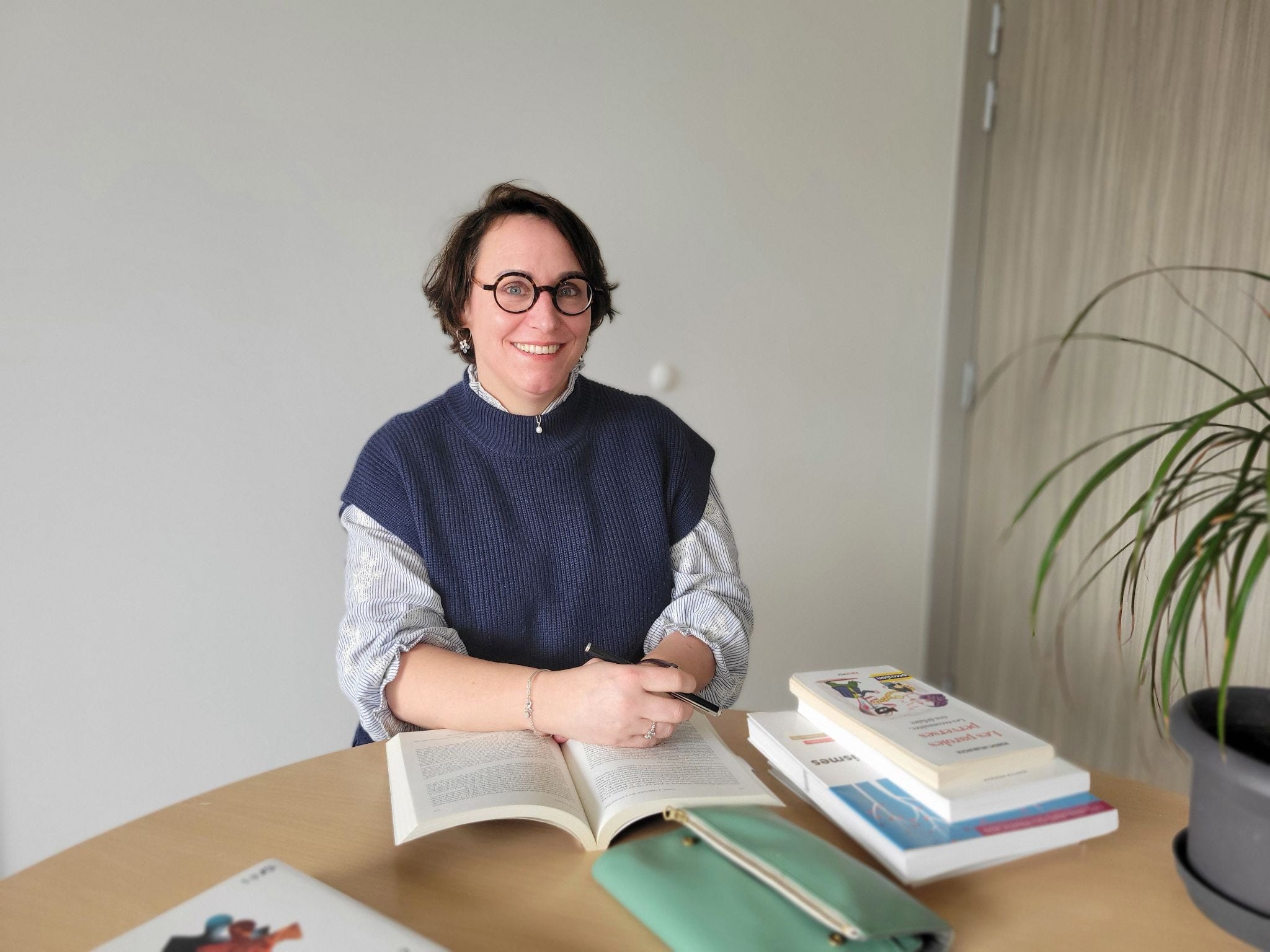
In your article Psychological care in prison: the importance of ethical reflection, you examine a certain “infiltration” of the judicial institution into the process of care2.
You cite an interview with Michel Foucault and Pierre Werner, where Foucault discusses the central role of medical practice in mechanisms of social repression: “As if punishing a crime no longer made much sense, we assimilate the criminal to a patient, and the sentence claims to be a therapeutic prescription.”3
How does this infiltration alter the encounter between caregiver and patient, which is essential to a true care relationship?
To take a recent example, a man told me at the beginning of a session, “The judge said I won’t go to trial until I’ve put meaning to my actions.” So he doesn’t come to the consultation to deeply understand the causes of his distress or his actions. He comes with an order, to tick a box.
Detainees struggle to imagine that our sessions could be solely for them, to relieve their suffering, rather than another instrument of the prison institution. It’s very difficult as a care professional to break free from this once the mechanism is set in motion. But on the other hand, we can understand that he wants his trial to take place, that he wants to move forward in his incarceration.
Many patients also ask us if we will write a report for the judge, because they think it might benefit them. But it can just as easily harm them. There’s confusion between care and expertise: we’re perpetually forced to reset the framework.
We regularly clarify in interviews that we have nothing to do with forensic psychiatrists, that we don’t write reports, that we don’t transmit information, that professional secrecy is preserved. We remind them that here, we are under the responsibility of the Ministry of Health, not the Ministry of Justice, which is the case for the rest of the facilities.
And a few months later, we have to clarify it again, because in the meantime, people receive conflicting instructions. Other intervenors tell them, “I’ll talk to your psychologist,” or ask them to work on a specific topic, rather than letting them come to me autonomously.
My mission is a public health mission, aimed at relieving suffering. The person works on what they want to work on. Often it’s around the violent act, but it can also be about relational and family issues outside, or about incarceration itself — living in nine square metres with a cellmate you didn’t choose to live with, yes, that can make you want to go mad.
We try to access the authentic in the encounter with detainees. And that’s very difficult when the person acts based on an external, institutional injunction. It’s only possible after we’ve explained to them at length that what they say will not leave our exchange.
It should also be noted that infiltration can go both ways: we, in the care world, can also, out of convenience, infiltrate the judicial. We can start wanting to know a lot of things about a patient, to have access to information that isn’t intended for us. Maintaining our stance requires real ethical rigour.
What risks do you see in approaching care in prison settings by categorising people based on what they did?
Categorisation traps people. Before even meeting someone, we’ve already formed a simplified idea of who they are.
Of course, it’s human nature. We need to categorise to understand, to reassure ourselves. But the risk lies in confusing penal and psychiatric categories — when within the “sexual offender” category, for example, there are many different psychological mechanisms. The same goes for domestic violence offenders or drug users.
The same act can reveal a very different cognitive structure: for one person, a reactivation of trauma; for another, psychopathy. It’s not the same approach to care.
Similarly, as the psychoanalyst Christophe Dejours shows, there are sexual crimes that are more about violence than sexuality, and violent crimes that are highly eroticised. That’s something the penal category might miss.
The risk, then, is having a “tell me what you did, and I’ll tell you who you are” approach. One day, I had an older man come in; and with the extension of the statute of limitations for sexual violence, we had many older men arriving in prison with convictions of that type. I admit that in my head, I thought he was definitely a sex offender.
And turns out, not at all, he had dealt drugs, even though he was over 80. I wasn’t the only one, by the way — everyone else also thought he was a sex offender. And that’s not well seen at all in prison: other detainees call them “pointeurs,” don’t tolerate them, mistreat them. The man had to ask prison staff to be allowed to carry his criminal record on him, to get others to stop bothering him and see him as the ‘grandaddy dealer’ instead.
To avoid these pitfalls, with my colleagues, we propose therapeutic groups that consider psychological symptoms rather than penal categories — for example, alexithymia, the inability to express one’s emotions.
It’s interesting to see how these categories not only trap people but also permeate social relations within the prison itself.
Yes, there’s a whole hierarchy. To caricature, at the top are robbers without blood on their hands, then dealers who don’t use drugs themselves, then traveler people, and so on. In some prisons, they almost have entire floors based on these categories; others are specifically designated for sex offenders.
So detainees don’t meet a person, they meet an act. That’s why I rarely ask my patients what they’ve done. Sometimes, it comes up after two or three interviews if the person wants to talk about it; but it’s not my mission. Many announce it immediately, very easily, because they’re used to being asked; in those cases, I often say, “We’ll talk about that later, I’d first like to know who you are.”
In prison, there are so few boundaries, the intimate systematically becomes extimate. My role is to help people put boundaries back in place. To make them understand that we can meet without necessarily being determined by the penal context.
This “forced extimacy” ties in to the notion you address in the article of a prison system that “traps patients in heteronomy4, not giving them the possibility to access physical and psychological autonomy.”
The fact that you help these people “put boundaries back in place” may seem counterintuitive to some — it requires us to question our ingrained punitive reflex that would deny a detainee any right to claim autonomy, especially a sexual offender who themselves took away another’s autonomy. But it’s essential if we want to build a society no longer enslaved to violence.
What strategies do you implement with your patients to allow them to maintain a semblance of autonomy and intimacy in the prison space?
To me, that’s partly what therapy is meant for. When patients have gone through a trial, they’ve been “narrated” by everyone else: their family, witnesses, sometimes even their kindergarten teacher came to talk about who they are. Therapy sessions are one of the rare places where they can “subjectify” themselves, tell their own story, make their own narrative without it being used for any purpose.
It is therefore vital to offer a secure framework. That’s why I reiterate the dimension of professional secrecy so much — something I wouldn’t necessarily do in other structures or workplaces. Autonomy is partly built through it.
The notion of “good care” as that which allows a person to regain autonomy is central to the construction of better care systems.
As philosopher Christine Leroy explains in her interview with the Fifth Wave Institute:
“Those who educate or provide care are often dominant when they should be supportive. (...) This dilemma lies at the heart of the difficulty of caregiving: does helping someone mean doing things for them, or enabling them to do things themselves? (...)
It’s not that the person isn’t autonomous; it’s that we deprive them of their desire for autonomy. Letting them try would require time and resources that are cruelly lacking. In this context, care – or what remains of it after hyper-rationalised costs and work schedules – often contributes more to the loss of autonomy than to its preservation.”
For a concrete example of a system that contributes to such ‘reablement’, see this Danish study on home care reforms5.
Autonomy also comes from breaking free from external injunctions coming from the judicial system or the family. On the contrary, we ask detainees: “What about you? What are your anxieties, your desires?” Without positioning ourselves as experts, without telling them we know what’s good for them. They have resources, we help them find them. Discovering a capacity to reflect on themselves will also help them when they’re back outside.
In the context of sexual violence in particular, it is often said that psychiatry is too mobilised in the judicial process, to the detriment of other explanatory frameworks for violent acts, like sociology. Do you agree?
There is definitely a difficulty in considering the patriarchal context beyond the individual context. Judge Édouard Durand said about incest, “We have freed speech, but we haven’t yet freed listening.” It’s true for all of society, whether it be about incest or rape or domestic abuse: people are not yet ready to hear that violence is systemic. There’s still a lot of work to be done.
I’m currently training in systemic therapy — a discipline that takes into account the environment, the competence of families, the competence of individuals, and how to activate them, to achieve more comprehensive care.
Systemic theory speaks of equifinality: there can be multiple causes for the same result. This aligns with Edgar Morin’s complex thought theory, which invites us to resist the tendency to simplify, to categorise. Having a field of practice shouldn’t blind us or confine us to a very linear understanding.
And at the same time, we always start from the principle that people are responsible for their actions. Reflecting on the reasons why a person acted violently never aims to excuse the violence.
You host workshops for Solidarité Femmes 21, a charity that supports victims of domestic violence. What’s the goal of these workshops?
We mainly train VIF (intrafamilial violence) networks in Saône-et-Loire and Côte-d’Or. The goal is that on the same territory, a set of professionals — caregivers, social workers, lawyers, police officers — can meet, exchange, reflect together, and coordinate care provision.
The workshops must imperatively be multi-institutional and multi-professional. Meeting each other allows for a better understanding of the limits of each other’s missions: in case of failed care, it helps avoid the pattern of always blaming others for not doing their job properly.
My colleague, who works with victims, and I with perpetrators, bring an important base of theoretical knowledge. This allows us to go beyond a very Manichaean conception of “good victims, mean perpetrators” as well as to constitute a common language within the network on one territory: what are we talking about when we talk about domestic violence? What are the different types, the different mechanisms?
Finally, understanding allows us to move from reaction to intervention. Domestic violence produces a high level of reactivity: we want the violence to stop as quickly as possible, partly because we ourselves, as professionals, can’t take it anymore.
For example, when some women return to their violent homes, care providers can get frustrated, because they don’t understand why. So in our sessions, we explain to them that these are not pointless back-and-forths that reset everything to zero but that at each stage, a little power has been gained, something has evolved, we can work on it.
Understanding allows us to work with, rather than against, the unique temporality of each person. Rushing them risks aggravating the situation. The workshops allow us to put the person back at the center, to make them the master of their life, and not to replay the violence they have experienced by ordering them what to do.
Do the workshops also include femicide prevention?
Yes, we work on assessing levels of danger. Beyond observed physical violence, coercive control and the context of separation are major risk factors. And one can be very controlling without being physically violent.
We also work on anticipating intervention: how to react if tomorrow, within my institution, I am confronted with a risk of femicide? For example, if I’m attached to the hospital, the lifting of professional secrecy is subject to rigid procedures, whereas other institutions approach it differently.
To explain a detainee’s journey, we often point to unidentified violence and missed opportunities for psychological or psychiatric care. Is this something you’ve observed?
Yes, our patients often grew up in contexts of violence and neglect. Childhood and its difficulties are very present. It’s often normalised: they say their childhood was “like everyone else’s”, but we quickly realise that wasn’t the case. And often, indeed, they themselves say that they might have turned out better if they had seen a psychologist earlier.
But we also have the wrong filter: we only see those whose paths have led them to prison. If we take domestic violence, for example, 70% of people who grow up in such a context do not reproduce it in adulthood. But I see those who, among the 30%, become perpetrators; and my colleague who works with victims sees those who reproduce the cycle in the other direction.
So we must not forget that beyond those for whom difficulties persist, there are those who are doing well.
Moreover, even if therapy occurs upstream, a certain mindset and living environment are also needed to truly work on oneself. Time must be freed up. Prison is obviously very heavy, but it also has a “parexcitatory” dimension: it isolates one from the external environment. Therapeutic introspection can therefore be made easier.
I work with a few people who’ve been released from prison, and it’s often complicated to maintain constructive exchanges; they are caught in other difficulties. So it’s a shortcut to say that if a person had been taken care of earlier, they wouldn’t have acted out violently — because even if they had benefited from therapy, they might not have been able to do it properly.
Finally, we also cannot place the responsibility for a violent act — or the lack thereof — on psychology alone. A psychiatrist colleague reminded me that some people can do intense work on themselves and reoffend, while others do none, but the sanction of prison will be enough to stop them reoffending. We must not see psychologists as a deus ex machina: when someone’s entire life context is violent, it’s never linear.
Finally, a question I ask all my interviewees: who do you care for, and who cares for you?
I take care of those we forget. Those we don’t see — they may be in the news all the time, but it’s not really them we look at, but rather what they did. Even within prison walls, I am very sensitive to the quiet ones, those we don’t hear. I’ve worked on the silence of emotions a lot, I’m particularly sensitive to it.
On the other hand, my team takes care of me. I couldn’t work without them. We operate in an environment with a lot of destruction, so it’s vital to have pockets of support. Supervision, in particular, plays an important role for me, to be able to put thought back into lived experiences.
Finally, in the context of care, we are very exposed to compassion fatigue and vicarious trauma. We must therefore implement practices that take care of us: reading light things, spending time with family, creating a soothing environment. It’s vital to have the space to do this.
Thank you for reading this interview. If you know care workers, caregivers, policymakers, researchers or other actors invested in the construction of better care systems, don’t hesitate to share our work with them. And if you have suggestions of people you think we should interview, don’t hesitate to let us know :)
The French lawyer, writer and former Minister of Justice who successfully lobbied for the abolition of the death penalty in France in 1981.
Favre, C. Les soins psychiques en milieu carcéral: de l’importance d’une réflexion éthique. Soins, 2025: n°898, pp. 60-63.
Foucault, M. L’extension sociale de la norme (entretien avec P. Werner). Politique Hebdo 1976 ; (212) : 14–6.
State of a person who “receives their law from outside rather than drawing it from within” (French Larousse Dictionary, cited in C. Favre).
Bødker NM, Langstrup H, Christensen U. What constitutes ‘good care’ and ‘good carers’? The normative implications of introducing reablement in Danish home care. Health Soc Care Community. 2019; 27: e871–e878. https://doi.org/10.1111/hsc.12815