

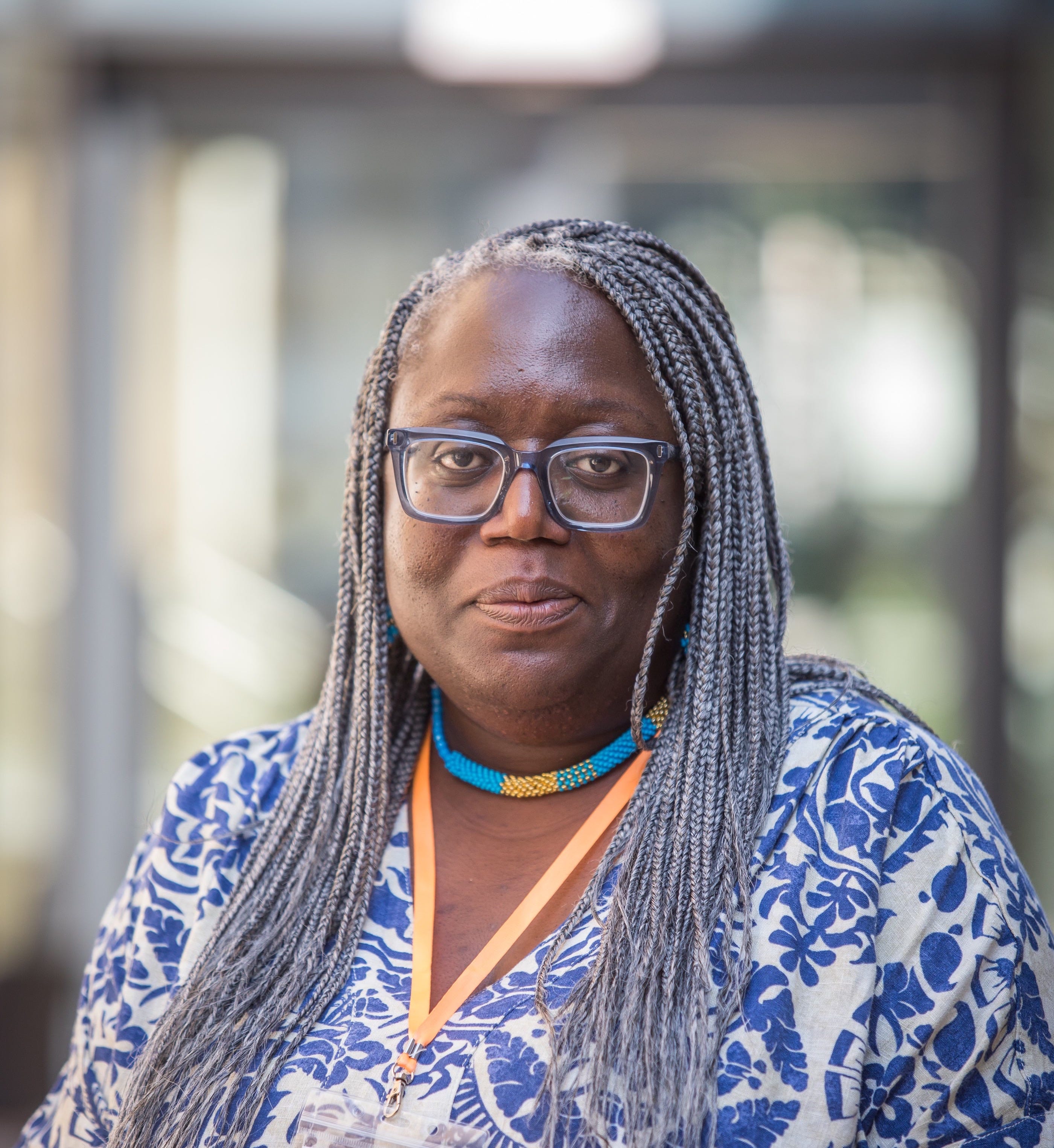
Afua Twum-Danso Imoh is Professor of Global Childhoods and Welfare at the University of Bristol’s School for Policy Studies. Her research focuses on how different cultural contexts understand childhood, and what implications this has for advancing children’s rights. She has also worked to challenge North-South binaries in childhood studies – particularly approaches that only look at African childhoods through the prism of what they lack, while affording greater complexity to the lives of children in other regions.1
Here, Afua explains how dominant children’s rights discourses carry a sometimes limited view of childhood, and how alternatives – including the ethics of care – can be better tools to help children flourish.
Interview written by Mélina Magdelénat on the basis of a recorded conversation. Special thanks to aelle for her careful reading and comments.
Your research critiques dominant discourses around children’s rights today. Why?
A binary has come to dominate our contemporary understandings of what it means to be a child and what it means to be an adult. We have very clear expectations for each: in adulthood, you should be rational, competent, mature, independent, knowledgeable about the world, and agentic. In childhood, you are the opposite: irrational, incompetent, immature, dependent, ignorant, and passive. Before eighteen, you are a child, and once you turn eighteen, we are justified in expecting adult behaviours from you.
This ‘deficit’ understanding is the one implicitly conveyed by contemporary children’s rights frameworks such as the United Nations Convention on the Rights of the Child (UNCRC). The UNCRC can be a great tool: to name just a few victories, more children are surviving beyond the age of five due to interventions informed by it, and seventy-five countries have banned physical punishment in all spheres thanks to it. However, it is a product of this deep-rooted binary.
For example, where the text (which has been ratified by all countries worldwide apart from the United States) includes provisions for participation rights, creating opportunities for children to express their views and take part in decision-making, it does so only in a way which lets adults retain the final say. Children’s interests are framed primarily in terms of protection, and much less so in terms of representation or autonomy; and little effort is made to consider them as part of wider webs of relationships.

This understanding reveals its limits when imposed on communities that don’t use incompetence as their starting point for understanding childhood. I’ve done most of my research in cities and villages in West Africa, particularly Ghana and Nigeria, as well as with Gypsy, Roma and Traveller communities in a London borough. What emerged from my conversations both with adults and with children themselves is that from a young age, many children in such contexts have duties and responsibilities towards their household and their family, which vary with age and with gender. A child is part of the wider group, much like everyone else, and they have a role to play.
Within those contexts, childhood isn’t not about dependency – it absolutely is, but there is also a recognition that children can contribute in a meaningful way. That parents themselves are not always perfect, not always independent; for them to fulfil their missions within the household, everybody needs to play their part. And relationships are strongly reciprocal: in Ghana for example, my colleague Samuel Okyere and I showed that children who worked through the school holidays to help their parents pay for their school fees tended to be granted a greater weight in decision-making. Parents sought their advice more.2
When attempts to advance children’s rights ‘from above’ in those contexts do not take the time to consider these specificities, it can lead to tensions about where children’s best interests lie.
Can you give an example of when the two understandings clashed?
In Bolivia, the Unión de Niños y Niñas Trabajadores de Bolivia (Union of Child Workers in Bolivia, or UNATSBO) has been advocating since 2000 for an approach to work and children’s rights that does not focus exclusively on protecting children from work, but also, in some circumstances, on protecting them in work. In Andean cultures, many young people see work as an important part of their education and their participation in public life – UNATSBO’s slogan is ‘Mi fortaleza es mi trabajo’, i.e. ‘My strength is my work’. Some of it is light work like selling things on the street, and some of it is heavier, like working on a construction site; it sometimes clashes with school, and sometimes happens around it.
One of UNATSBO’s arguments is that outright barring children from working simply leaves them even more vulnerable to exploitation, in a country where 850,000 under-18s work. In 2014, after a strong mobilisation from the movement, Bolivian president Evo Morales approved a new children’s code reducing the age at which children could legally work from 14 to 12 for work under an employer, and to 10 for ‘self-employed’ work, with age-specific restrictions and requirements for parental and municipal authorizations.
Immediately, there were swift reactions from the international community. Bodies like the UN, the International Labour Organisation (ILO), and Human Rights Watch condemned the code. In Latin America and inside Bolivia, while many children’s rights NGOs had celebrated it, others voiced their opposition, including many in the Bolivian middle class. The United States “threatened to remove [Bolivia’s] advantageous customs tariffs on exports to the US”.3 Eventually, in 2018, Bolivia’s Parliament and Senate amended the code to bring it in line with ILO guidelines, removing legal protections for working children under 14.
Such cases make evident how powerful the dominant discourse around children’s rights is. An alternative briefly emerged, and, consciously or not, the entire infrastructure moved as one to suppress it, without considering whether it might work better for children in that particular context.
How, then, do you approach advancing children’s rights in a manner conscious of local specificities without falling into the trap of cultural relativism? Without saying, ‘this is what childhood means here, therefore any abuses are justified by culture’?
The answer has to come from inside communities. Cultures are not homogenous, nor are they static; no community is uniform, no matter how small. Not everyone adheres to it in the same way.
For example, one community might practice female genital mutilation/cutting (FGM/C), but outside influences and people’s intuitions might lead some within the group to advocate against it. Those people who express dissent, even if they do so quietly for fear of being stigmatised, are our starting point. Change is possible because people already sit at different points on an issue. When I’m engaging with a particular community on a particular children’s rights issue, my first questions are, ‘What are the tensions here? What are the differential views and experiences in this community?’ We can then bring people into a dialogue around those tensions, explore how some practices impede children’s well-being – as facilitators, not as outsiders controlling the conversation – and gradually sketch a better path.
Those internal conversations might not lead exactly where I would want them to end up, or where the UN would like them to end up. But they will lead to change that people are actually willing to police and enforce amongst themselves. Change brought about in this way will be a lot more effective and long-lasting than if it’s imposed from the top.
Are you seeing those alternative approaches to children’s rights gain steam?
Not really. Many people have been critiquing the dominant discourse – including in Europe and North America, its limitations are by no means visible only in the Global South – and grappling with alternative ways of thinking about rights. The ethics of care is one framework that can help: it makes evident the limits of a framework modelled on the autonomous individual who must above all protect themselves from intervention by others, which fails to account for the place of relationships, of responsibilities, of interdependencies. It shows how dominant discourses that see children as passive care receivers leave little space for reciprocity and mutuality.
But despite the merits of these alternatives, the dominant discourse is so set that I struggle to see it shifting. It’s surrounded by an infrastructure that is really quite powerful, as we saw with the Bolivia example. It’s become so embedded in policy and elite contexts in the Global South: when I talk to policymakers in Ghana, in Nigeria, they are wedded to it. They can see that it’s especially inadapted to their context, but when you try to push them to think of alternatives, they close off.
This is not particularly surprising. It’s hard to stop seeing ‘rights’ as an unequivocal good. When people see a tension between the dominant discourse and societal practices, they automatically think societies are the ones that need fixing – and never that, in some cases, the one-size-fits-all approach to rights might in fact be the issue.
Those who are working on alternatives need to do more to communicate them, and to show the red lines in the sand. To show that what they propose is not a free-for-all, not ‘anything goes’. If you are not clear about those red lines, if you don’t make a meaningful case for why alternatives can be beneficial to children and better accompany the improvement of their lives, then every single time the dominant discourse is going to frame your argument as though you do not care about children and want to expose them to abuse.
Finally, a question I ask all my interviewees: Who do you care for, and who cares for you?
I have two children, they’re twenty-one and fifteen. I care for them of course, but interestingly for the purposes of this conversation, they also care for me in many ways. I didn’t expect them to as I brought them up – I believe my children have certain duties and responsibilities, but looking after me is not one of them. And yet they do. From a young age, my daughter would often ask how I was, whether I needed anything; if I wasn’t feeling well she’d make me a cup of tea or would get someone else to do it without being asked. My son does it too, though he might need to be asked a little more often – there is probably a gendered dimension to it.
Those small interactions got me thinking about how young people give care. There’s a fascinating book called Children as Caregivers by Jean Hunleth, an American anthropologist studying Zambia. She describes meeting a woman who had tuberculosis and was brought back to health by her two young daughters. To this woman, her daughters’ care wasn’t a last resort, mobilised only because others in her community weren’t available. It was optimal care in and of itself.
We focus on care as something parents give to children, but much less so the other way around; and I’m starting to think we might be doing children a massive disservice by thinking they can live with people and not concern themselves with the well-being of those people, not want to help when help is needed. If we only see children responding with care as a policy issue that needs fixing, we are missing something. I’m not talking about the specific situations of young carers or children with disproportionate responsibilities – but we underestimate the number of ways young people can make meaningful and high-quality contributions in caring for their household and the people in it. My children get me thinking about care in those ways. They want to give back the care they’ve received. Children are not islands.
To find out more about Afua’s work and Critical Children’s Rights Studies:
Llobet, V.; Reynaert, D.; Twum-Danso Imoh, A. & Vandenhole, W. (Eds.) (2025). Critical Children’s Rights Studies. A Research Companion. Routledge.
Twum-Danso Imoh, A. (2024), Turning Global Rights into Local Realities: Realizing Children’s Rights in Ghana’s Pluralistic Society, Bristol: Bristol University Press
Twum-Danso Imoh, A., & Okyere, S. (2020). Towards a More Holistic Understanding of Child Participation: Foregrounding the Experiences of Children in Ghana and Nigeria. Children and Youth Services Review, 112-104927.
‘Bolivia bows to international pressure’, Manfred Liebel, Development and Cooperation, 02.05.2019.
More interviews:
Caring in uncaring places

Claire Favre is a clinical psychologist in the Varennes-le-Grand Penitentiary Centre in Burgundy, France, and an associate researcher of the Psy-DREPI lab at Bourgogne Europe University. She also trains professionals in addressing domestic violence for
Who will be there at the end of our lives?

François Génin co-founded Voisins & Soins (Neighbours & Care), a French nonprofit that accompanies people living their final months and days at home. Small teams combine healthcare professionals and trained volunteers to provide holistic end-of-life care within a person’s home, while also providing respite and support t…
This was very interesting. I visited Benin, where my husband is from, with my husband and kids last year, and I was very struck by this question. We saw many children working, but when I saw it with my own eyes I did not see it as necessarily a "problem to be solved", and interestingly, my young children also admired it and even expressed envy of it. Of course I don't want to oversimplify it, but it was definitely a sharp counterpoint to the perspective I had internalised that when children need to work to support their families, it is intrinsically a form of oppression or exploitation.